1. TECH Overview
Evercurb is a curb-integrated power and data delivery platform that transforms the linear edge of the sidewalk into a continuous, modular utility spine. It provides safe, distributed AC and DC power, along with high-bandwidth communications, to any device located along the street edge, including:
Electric vehicles and micro-mobility (cars, vans, e-bikes, scooters)
Street lighting, signage, and traffic control devices
Sensors, cameras, environmental monitors
Vending, kiosks, and temporary event infrastructure
The system is designed to be retrofitted into existing streetscapes or embedded in new construction without disrupting pedestrian circulation or vehicle lanes.
2. System Architecture
Evercurb consists of a set of coordinated subsystems integrated into prefabricated curb modules:
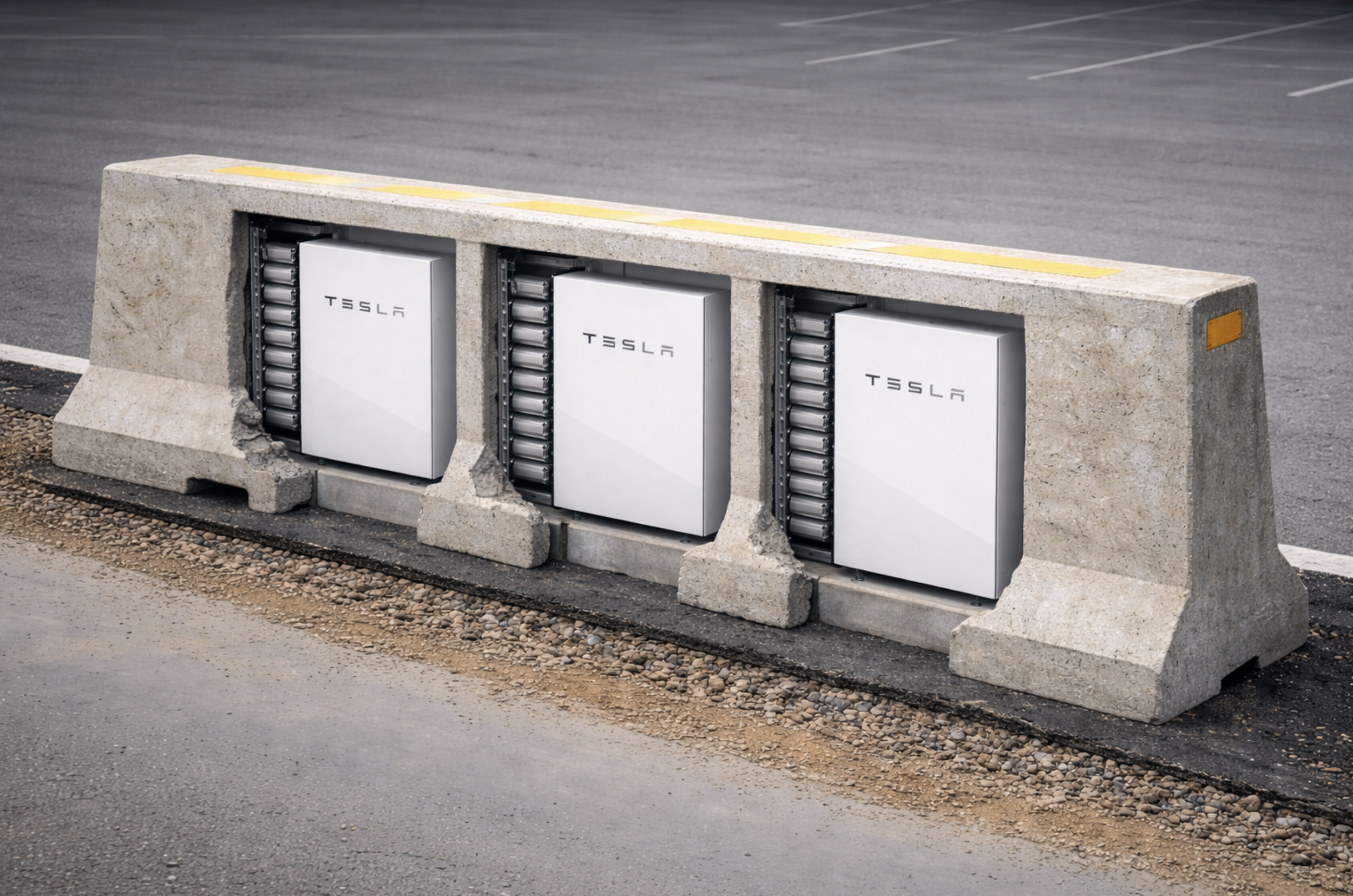
Structural Curb Module
Precast concrete, engineered stone, or recycled composite curb sections
Internal channels for power, data, and drainage management
Standardized curb geometry for compatibility with local DOT and city standards
Surface designed to withstand wheel impact, de-icing salts, water, and freeze–thaw cycles
Power Distribution Spine
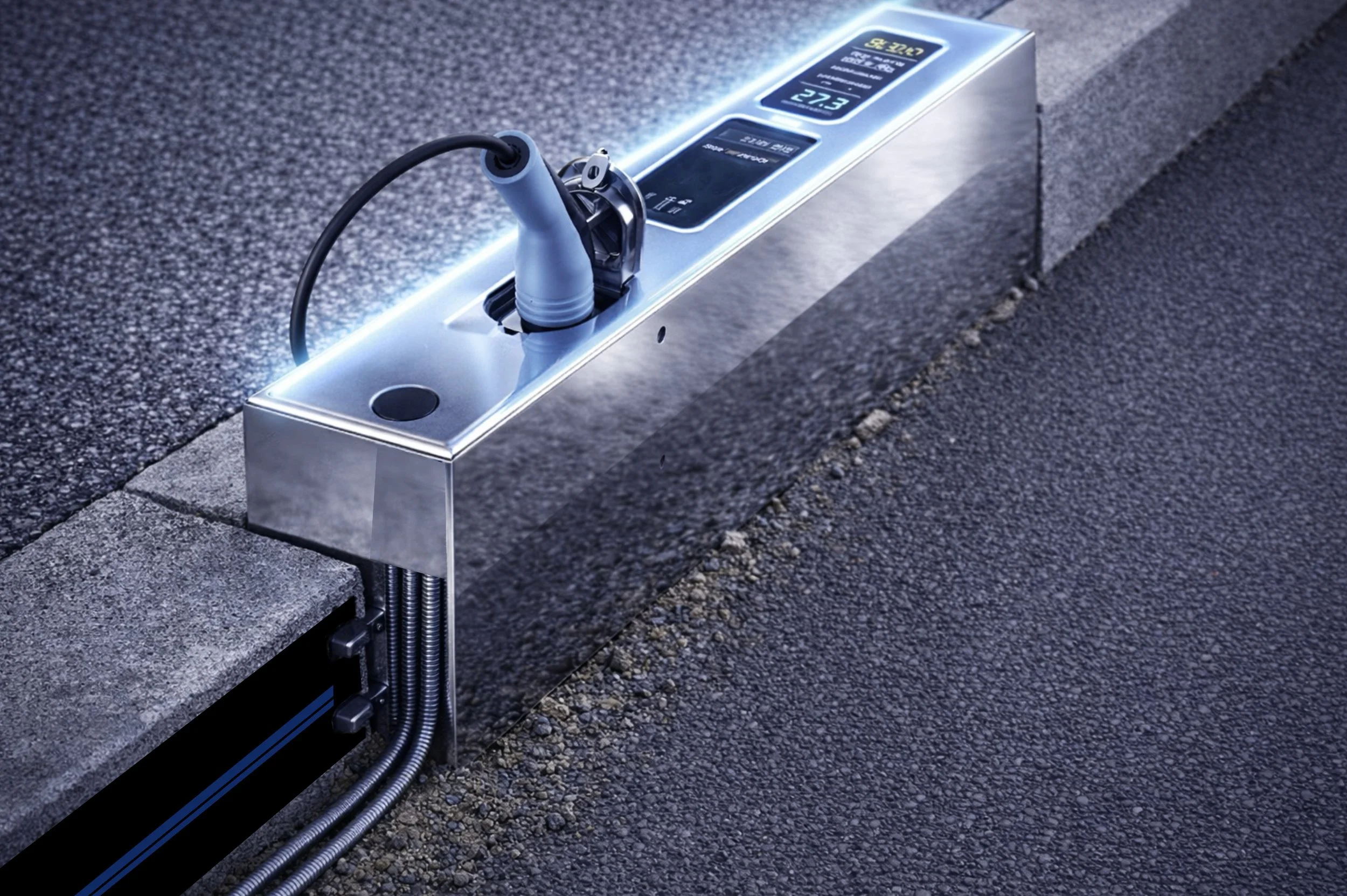
Enclosed busways running longitudinally inside the curb
Segregated AC and DC channels
Tap points at regular intervals for connection to devices and charging points
Integrated overcurrent, ground-fault, and isolation protection
Power Conversion and Control Units (PCUs)
Discrete PCUs located periodically (for example every 20–50 meters) within curb modules or adjoining utility vaults
AC–DC conversion for DC bus (e.g., 400–800 V DC) and regulated low-voltage DC rails for sensors and low-power devices
Bidirectional power electronics that can support grid-interactive loads and future vehicle-to-grid (V2G) functions
Local measurement, protection, and switching hardware
Access Ports and Interfaces at the Curb Edge
Ruggedized, weather-sealed connection points flush with or slightly inset from the curb face
Configurable options including:
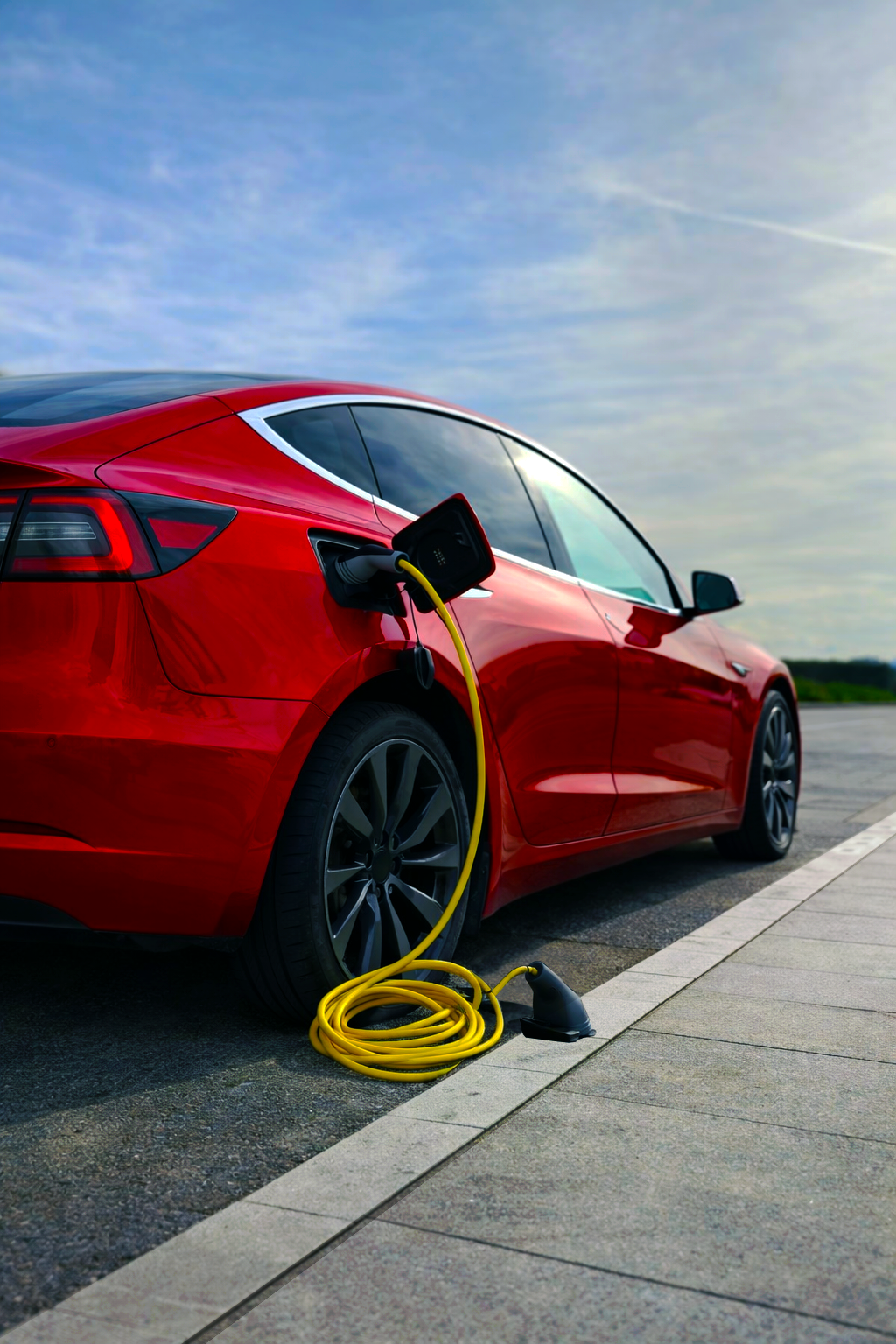
Fixed charging pedestals
Flush sockets and retractable connectors
Inductive pads embedded in the road surface near the curb
Mechanical locking and access control to prevent vandalism and unauthorized use
Communications and Data Layer
Integrated data conduits within the curb for fiber or copper
Edge controllers and gateways located in selected modules
Support for common protocols such as OCPP for chargers, Modbus / IEC protocols for power management, and IP-based connectivity for sensors
Optional integration with cellular small cells or Wi-Fi access points hosted at the curb
Supervisory Platform (Cloud or On-Prem)
Centralized monitoring of all curb segments and devices
Load management and demand response coordination
User authentication, billing, and usage analytics
Interfaces for city operations dashboards and third-party service providers
3. Functional Capabilities
3.1 Distributed Power Delivery
Primary feed from local distribution grid or building service brought to one or more injection points.
Longitudinal bus distributes power along the block, reducing the need for multiple standalone bollards or cabinets.
Configurable AC outputs for conventional loads and DC rails optimized for EV and micro-mobility charging, lighting, and electronics.
3.2 Multi-Modal Charging
Support for different charging regimes at the same curb spine:
Level 2 EV AC charging
DC fast charging at selected nodes
Dedicated circuits for e-bikes, scooters, and cargo bikes
Ability to add or reconfigure charging points without major civil works, using standardized curb access modules.
3.3 Integrated Data and Sensing
Continuous data backbone enabling:
Environmental sensing (air quality, noise, temperature, humidity)
Traffic and occupancy monitoring
Infrastructure diagnostics (surge detection, moisture ingress, vandalism)
Local edge compute at PCUs for real-time control and reduction of backhaul data loads.
3.4 Smart Load Management
Dynamic allocation of available power across multiple devices along a block or district.
Prioritization logic (e.g., emergency vehicles, public transit, critical infrastructure) built into the control software.
Ability to shape load profiles to respond to peak pricing, grid constraints, or renewable generation patterns.
4. Safety and Compliance
Evercurb is engineered to meet or exceed applicable electrical and civil standards, including:
Electrical codes such as NEC for distribution, grounding, and overcurrent protection
Standard practices for underground and near-surface power distribution enclosures
Ingress protection ratings (targeting IP65 or higher for curb interfaces)
Impact resistance standards for vehicle contact and snowplow interaction
Slip, trip, and fall safety requirements for pedestrians
Core safety mechanisms include:
Segregated compartments for power and data
Double or reinforced insulation within bus channels
Fast disconnect and isolation in the event of faults or flooding
Ground-fault detection and automatic shutdown of individual segments if anomalies are detected
Tamper-resistant enclosures and controlled access for maintenance
5. Installation and Maintenance
5.1 Installation
Modular curb sections are delivered prefabricated and installed using standard curb setting methods.
Power and data bus elements are connected via sealed couplers that maintain continuity across modules.
PCUs are placed in accessible but protected locations for service.
System can be connected to existing manholes, vaults, or building service entrances to minimize new trenching.
5.2 Maintenance Strategy
Hot-swappable curb modules at failure points, allowing replacement with minimal disruption.
Remote diagnostics identify failing segments or devices, reducing site visits.
Standardized components and mechanical interfaces to simplify inventory and field repair.
6. Scalability and Interoperability
Evercurb is designed as an open, scalable platform:
Scalability
Can be deployed at the scale of a single block, a corridor, or an entire district.
Curbs can be phased in incrementally as streets are resurfaced or rebuilt.
Interoperability
Supports integration with multiple charger vendors and sensor providers through open protocols.
Designed to interconnect with city asset management systems and digital twins.
API access for mobility operators, utilities, and researchers to build services on top of the curb network.
7. Use Cases
Representative use cases along a single street or district include:
EV and micro-mobility charging lanes along commercial streets.
Power and connectivity for outdoor markets, festivals, and seasonal installations without diesel generators.
Integrated curb for “complete streets” projects that combine charging, smart lighting, and real-time environmental monitoring.
Power and data backbone for automated delivery robots and other emerging street-level autonomy systems.
8. Intellectual Property Position
Evercurb is protected by patents covering the integration of multi-channel power and data distribution in the curbline, modular bus structures, and configurable curb-edge interfaces that support multiple charging and information services from a unified curb spine. The system is differentiated from conventional stand-alone chargers or bollards by:
Its continuous, linear distribution architecture at the edge of the sidewalk.
The combination of high-capacity power, low-voltage DC, and data in a single curb module system.
Configurable, field-replaceable curb interfaces that can support any street-level device without re-excavation.